Question 1:
How many times are incense used within the Mass?
Answer: The General Instruction of the Roman Missal (GIRM) 276 identifies five occasions when incense may be used:
- a. During the entrance procession,
- b. At the beginning of Mass, to incense the cross and the altar;
- c. At the Gospel procession and the proclamation of the Gospel itself
- d. After the bread and the chalice have been placed upon the altar, to incense the offerings, the cross, and the altar, as well as the priest and the people.
- e. At the showing of the host and the chalice after the consecration. (GIRM, 276).
Question 2:
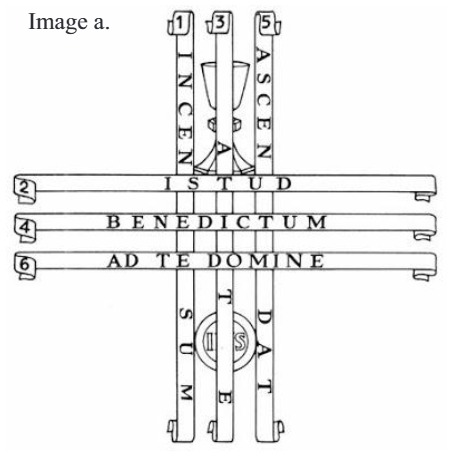
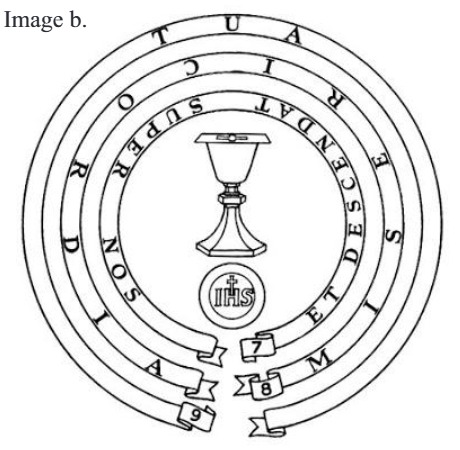
What is the traditional way of incensing the oblata (gifts of bread and wine)?
Answer: The priest makes the three signs of the cross over the bread and wine and then three circles, two counter–clock wise and one clockwise. See the images below
Question 3:
What you should know about incensation of images or liturgical objects within the Mass?
Answer: According to the General Instruction of the Roman Missal (GIRM) 277:
The Priest, having put incense into the thurible, blesses it with the Sign of the Cross, without saying anything. Before and after an incensation, a profound bow is made to the person or object that is incensed, except for the altar and the offerings for the Sacrifice of the Mass.
Three swings of the thurible are used to incense: The Most Blessed Sacrament, a relic of the Holy Cross and images of the Lord exposed for public veneration, the offerings for the Sacrifice of the Mass, the altar cross, the Book of the Gospels, the paschal candle, the Priest, and the people.
Two swings of the thurible are used to incense relics and images of the Saints exposed for public veneration; this should be done, however, only at the beginning of the celebration, following the incensation of the altar.
The altar is incensed with single swings of the thurible in this way:
“a) if the altar is freestanding with respect to the wall, the Priest incenses walking around it;
“b) if the altar is not freestanding, the Priest incenses it while walking first to the right-hand side, then to the left.
“The cross, if situated on the altar or near it, is incensed by the Priest before he incenses the altar; otherwise, he incenses it when he passes in front of it.
“The Priest incenses the offerings with three swings of the thurible or by making the Sign of the Cross over the offerings with the thurible before going on to incense the cross and the altar.”


Comments (0)
Security Check
Please complete the captcha to verify you are human.